

Indexed Universal Life Education
Understand Indexed Universal Life Before You Decide.
Indexed Universal Life (IUL) can be a valuable insurance strategy for some individuals, but it isn't the right fit for everyone. This guide explains how IUL works, how cash value may grow, the protection it provides, and the important costs, limitations, and policy features to understand before making any decisions.
-
 Since 1995 Of Continuous, Award-Winning Service
 -
 Top 1% Ranking With His Primary Carrier
 -
 LUTCF Credentialed Insurance Professional
 -
 Up to $750K Potential Living Benefits For a Qualifying Event
At a glance
Key Things to Know
About Indexed Universal Life
Before diving into the details, here's a high-level overview of what Indexed Universal Life is—and what it isn't.
-
Permanent
ProtectionProvides lifelong insurance coverage as long as policy requirements are met and the policy remains in force.
-
Cash
Value PotentialCash value may grow based on index-crediting methods added by insurance carrier rather than direct investment.
-
Flexible
Premium StructureMany policies allow flexibility in premium funding within guidelines, although sufficient funding remains important.
-
Death
BenefitDesigned primarily to provide financial protection for beneficiaries upon the insured's death.
-
Living
Benefit OptionsSome policies may include optional riders that allow access to a portion of the death benefit if qualifying conditions are met, subject to availability and policy terms.
-
Retirement
Planning DiscussionsWhen appropriately structured, an IUL policy may become part of broader retirement-income conversations. Results depend on policy performance, charges, funding, and current tax law.
-
Important
DisclosureImportant: Indexed Universal Life policies include costs, policy charges, underwriting requirements, and limitations. No specific growth rate, tax outcome, or retirement income is guaranteed.
Understanding the Basics
What Is Indexed Universal Life Insurance?
Indexed Universal Life (IUL) is permanent life insurance that provides a death benefit while offering the opportunity to build cash value over time. Its cash value may earn interest based on the performance of a selected market index, subject to the insurance carrier's rules.
Prefer to talk? (708) 401-7574
Interest is credited according to the terms of the policy and carrier guidelines. Policy values are not directly invested in market indexes.
Features of IUL
-
 Permanent Life Insurance
 - Cash Value Component
- Flexible Premium Structure
- Adjustable Death Benefit Options
- Index-Based Interest Crediting
- Long-Term Planning Focus
Unlike term life insurance, which generally provides coverage for a specific period, permanent life insurance is intended to remain in force throughout your lifetime as long as policy requirements are satisfied.

How cash value may grow
Understanding
Index Crediting
One of the defining characteristics of Indexed Universal Life is the way interest may be credited to the policy's cash value.
Rather than earning a fixed declared rate every year or directly investing in stocks, interest is generally determined using a market index and a set of rules established by the insurance company.
These rules help determine how much interest, if any, may be credited during a given crediting period.
-


Market Index
A market index acts as a benchmark used to calculate potential interest credits. Your policy is not directly invested in the index itself.
-
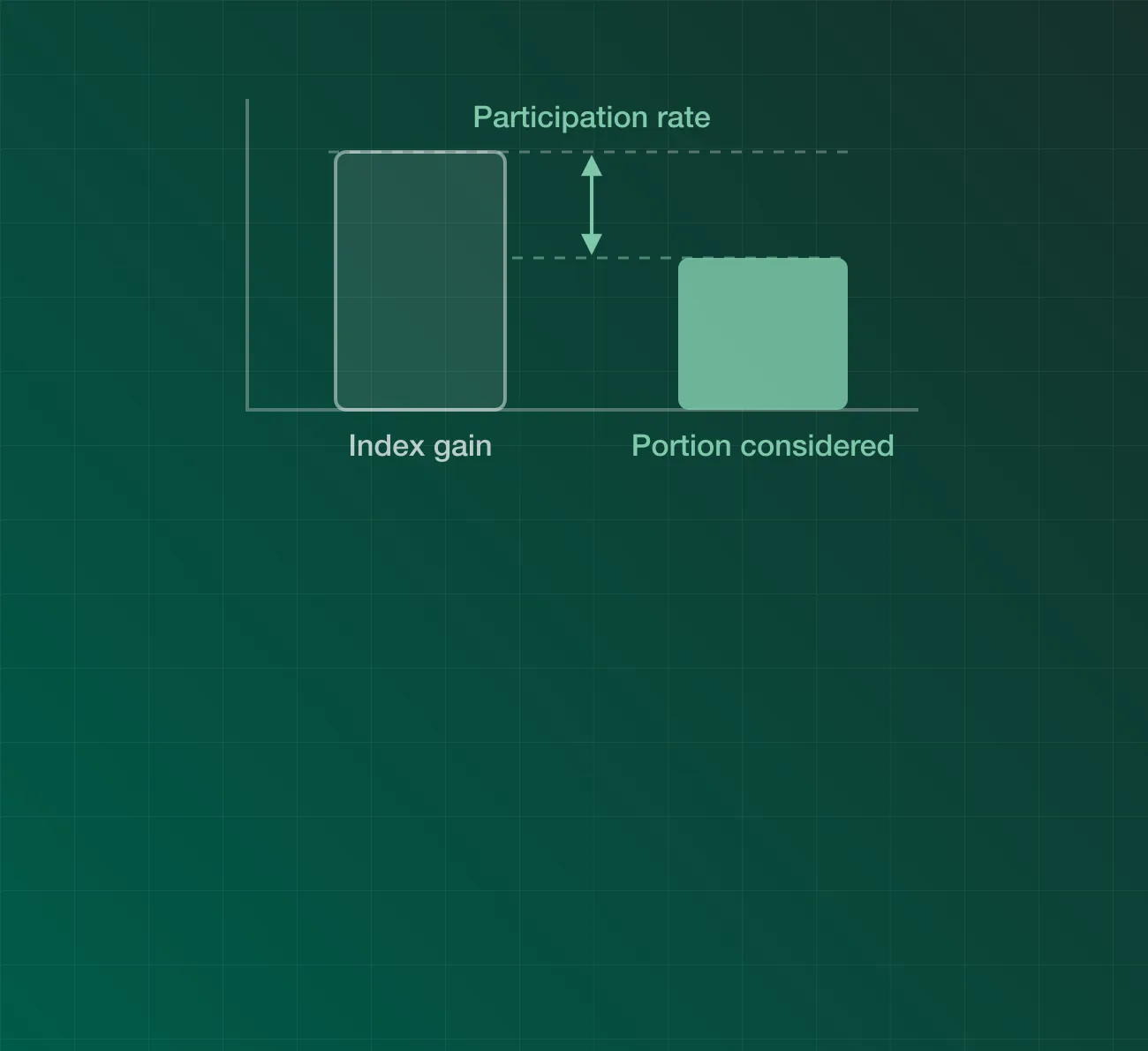

Participation Rate
Participation rates determine how much of an index's positive performance may be considered when calculating interest credits.
-
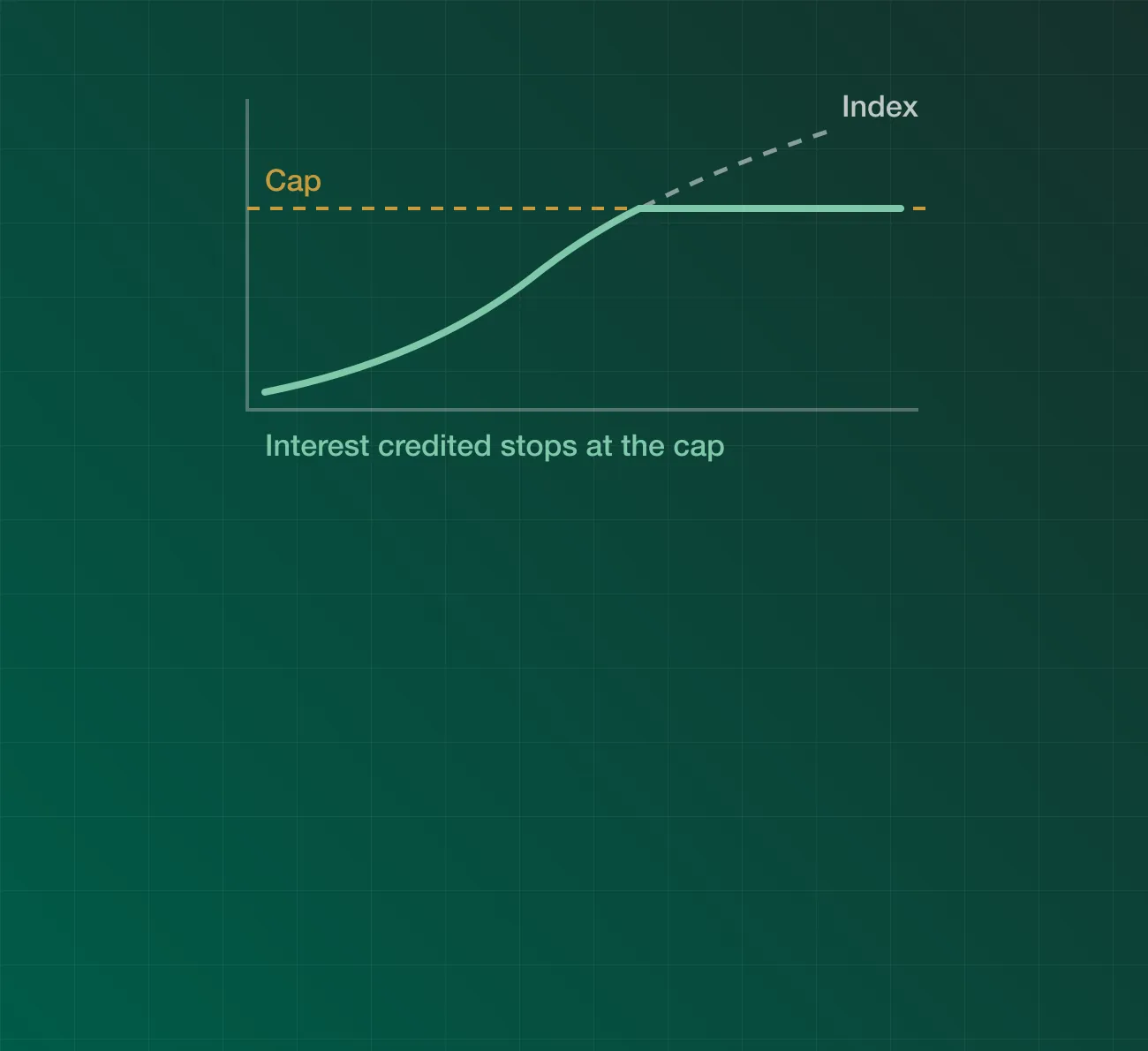

Cap Rate
Some policies include a maximum interest-crediting limit, known as a cap, even if the underlying index performs above that amount.
-
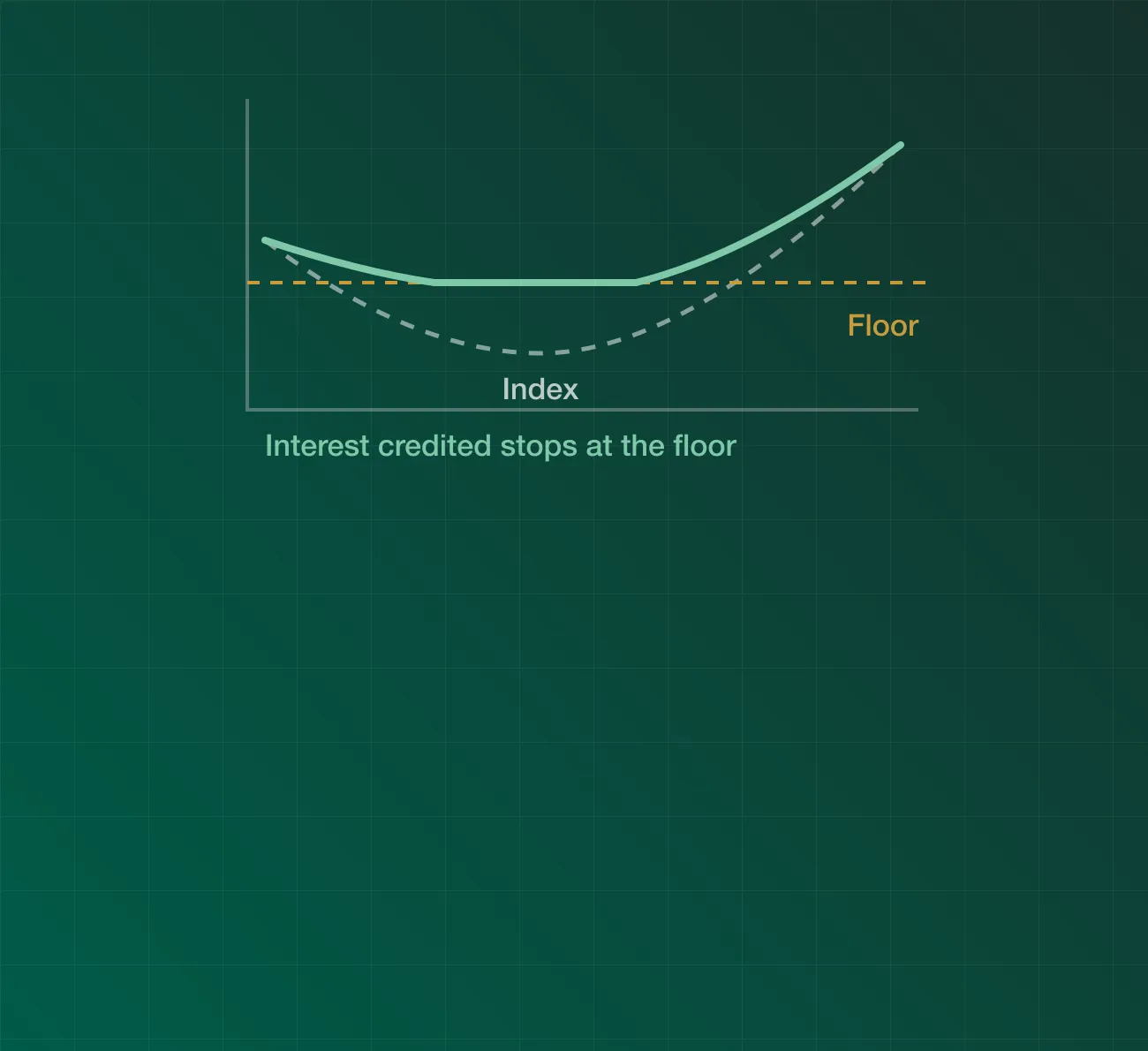

Floor
Many IUL policies include a floor that limits how much index performance can reduce credited interest during a crediting period.
Insurance Protection
Protection Today. Flexibility for Tomorrow.
At its core, Indexed Universal Life is designed to provide a death benefit that helps protect the people you care about. Depending on the policy, available riders, state regulations, and underwriting, some policies may also include living benefit options that allow access to a portion of the death benefit under qualifying circumstances.
-
Death Benefit Protection
Provides financial protection for beneficiaries according to the policy's terms and death benefit option.
-
Living Benefit Riders
May allow eligible policyholders to accelerate a portion of the death benefit if certain qualifying events occur.

-
Policy Flexibility
Many policies offer options to adjust certain policy features over time, subject to carrier rules.
-
Long-Term Protection
Coverage is intended to remain in force for life provided premiums and policy requirements are met.

Learn More About Living Benefits
Understand how living benefit riders may work, when they may apply, and why they differ between insurance carriers.
Living benefits are not included with every policy. Rider availability depends on carrier offerings, policy terms, state approval, underwriting, and qualifying conditions.
Retirement Education
How Indexed Universal Life May Fit Into Retirement Income Planning
Some individuals explore Indexed Universal Life as one component of a broader retirement strategy. When appropriately structured and funded, certain policies may support discussions around tax-advantaged income—but outcomes depend on many variables and should never be assumed.
Potential Benefits That May Be Discussed
- Supplemental retirement income strategies
- Tax diversification conversations
- Flexible access to policy cash value
- Legacy planning considerations
- Permanent insurance protection
Important Considerations
- Policy funding matters
- Costs reduce cash value
- Loans affect policy performance
- Withdrawals may have tax implications
- Tax laws may change
Understanding the Trade-Offs
Every Insurance Strategy Has Costs and Limitations
Understanding how an Indexed Universal Life policy works also means understanding the factors that can affect long-term performance.
Prefer to talk? (708) 401-7574
-
Administrative Fees
Policies include administrative expenses that reduce cash value over time.
-
Funding Requirements
Consistent funding is often important to maintaining policy performance and avoiding lapse.
-
Policy Loans
Loans reduce available cash value and death benefit until repaid according to policy terms.
-
Tax Law
Current tax treatment depends on applicable tax law, which may change in the future.
-
Long-Term Commitment
Indexed Universal Life is generally designed for individuals who intend to keep coverage for many years.
Is this worth exploring?
Who May Want to Learn More
About Indexed Universal Life
The qualification survey helps determine whether a conversation may be appropriate—it does not determine eligibility or policy approval. For state-specific context, read the Georgia IUL insurance guidance.
-

Looking for Permanent Protection
Interested in lifelong insurance coverage rather than temporary protection.
-

Exploring Retirement Strategies
Interested in understanding how life insurance may complement broader retirement discussions.
-

Learning Before Deciding
Prefers learning before making insurance decisions and takes every step carefully.
Understanding your options
How Indexed Universal Life Compares to Other Types of Life Insurance
Each type of life insurance is designed for different goals. Rather than asking which product is "best," it's more helpful to understand how they differ and which approach may align with your individual needs.
| Features Feature | Term Life Term Life | Whole Life Whole Life | IUL Indexed Universal Life |
|---|---|---|---|
| Coverage Duration | Fixed Fixed period (commonly 10–30 years) | Permanent | Permanent |
| Death Benefit | Yes | Yes | Yes |
| Cash Value | No | Yes | Yes |
| Premium Structure | Fixed Typically Fixed | Fixed Typically Fixed | Maybe Flexible May offer flexibility within policy guidelines |
| Cash Value Growth | None | Yes Based on policy guarantees and dividends (if applicable) | Index-linked Based on index-crediting methods and policy terms |
| Market Investment | No | No | No No (cash value is not directly invested in the market) |
| Living Benefit Riders | Maybe May be available | Maybe May be available | Maybe May be available |
| Retirement Income Discussions | Limited Generally Limited | Maybe May be considered | Maybe May be considered when appropriately structured |
| Flexibility | Limited | Lower | High Generally Higher |
| Underwriting Required | Yes | Yes | Yes |

Which One Is Right For You?
The right insurance strategy depends on your financial goals, desired flexibility, health, budget, and long-term objectives—not simply the product category.
A conversation with a licensed insurance professional can help determine which options may be appropriate for your situation.
Policy features vary by carrier and policy design. Coverage, costs, riders, and eligibility depend on underwriting and policy terms.
FAQs
Frequently Asked Questions
About Indexed Universal Life
What is the difference between Indexed Universal Life and Whole Life Insurance?
Whole Life policies generally provide fixed policy structures with guaranteed elements, while Indexed Universal Life uses index-crediting methods that may provide different growth opportunities depending on policy terms. Both are permanent life insurance products but operate differently.
Does an IUL invest directly in the stock market?
No. The policy is not invested in the market. Interest crediting is linked to the performance of an index, subject to the caps, participation rates and other limits written into the contract — which is a different thing from owning the underlying investments.
Is cash value guaranteed to grow every year?
No. A floor may protect the cash value from index losses, but fees and charges still apply and can reduce value. No specific rate of return, growth or savings amount is guaranteed.
Can I access my policy's cash value?
Policies are generally designed to allow access through loans or withdrawals, subject to the contract terms. Accessing value can reduce the death benefit and may affect how long the policy stays in force, so it is a decision to take with the contract open.
Can Indexed Universal Life be used during retirement?
When appropriately structured, an IUL policy may become part of broader retirement-income conversations. Results depend on policy performance, charges, funding and current tax law, so it belongs in a plan alongside your CPA rather than on its own.
What are Living Benefits?
Optional policy provisions that may allow access to a portion of the death benefit while you are still living, after a qualifying event. Access and amounts depend on your policy and are subject to policy terms. Our living benefits page covers them in full.


Book your consultation
Ready to Learn Whether Indexed Universal Life May Be Worth Exploring?
If you're interested in understanding whether an Indexed Universal Life policy may align with your goals, the next step is a short qualification survey.
The survey helps us understand your situation before recommending a conversation with a licensed insurance professional.
This is not an offer to enter into an agreement. Information and programs are subject to change without notice. Indexed Universal Life insurance is not a bank product and is not FDIC insured; it involves fees and charges, and access to living benefits requires a qualifying event and is subject to policy terms. No specific rate of return, growth, or savings amount is guaranteed. Not every applicant will qualify.